Badge First, Privacy Second? A Pre-Show Audit for 2027 Expo Apps
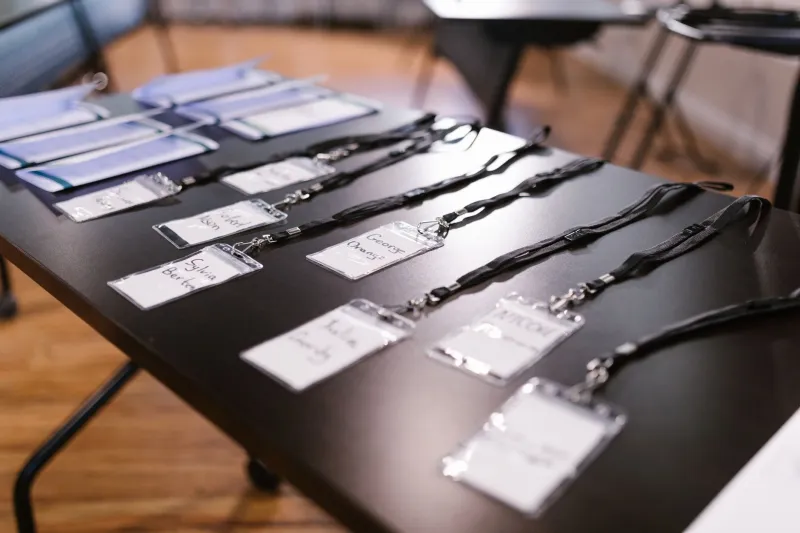
Long before a keynote begins, the badge app is already working. It may know when an attendee registered, which sessions were saved, which exhibitors were viewed, and where a phone has been during the show. For early adopters planning the 2027 U.S. expo calendar, the privacy question is not whether data will be collected. It is what kind of data, for how long, and with whom it will be shared.
That question deserves attention before the show floor opens. Conference apps often combine registration details, badge-scanning systems, location services, and exhibitor lead retrieval into a single experience. The result can be convenient. It can also produce a detailed behavioral record that follows an attendee well beyond the event.
What the Badge App Can See
Not every expo app collects the same data, but common categories include contact details from registration, session attendance, booth scans, saved exhibitors, in-app messages, and payment information for add-on events. Some apps also use Bluetooth beacons or Wi-Fi positioning to estimate location inside a venue. Others rely on badge QR codes that exhibitors scan to receive attendee information.
The most sensitive data is often the least obvious. A badge scan at a booth may share a name, employer, job title, email address, and phone number with an exhibitor. A session scan may record attendance and link it to a profile. A location permission may allow the app to infer which halls were visited and how long an attendee stayed. None of these practices is inherently improper. The issue is whether attendees understand them before they happen.
How U.S. Conference Data Practices Compare
U.S. conference data practices vary widely. Some events offer robust privacy notices, clear opt-in choices, and straightforward deletion requests. Others bundle consent into registration and rely on broad language about service providers and partners. Exhibitor lead retrieval adds another layer, because the show organizer may collect a scan while the exhibitor receives the contact record.
State privacy laws have raised the baseline in some jurisdictions. California residents, for example, have rights under the California Consumer Privacy Act as amended by the CPRA, including rights to know, delete, and opt out of certain sharing. Other states have enacted their own privacy statutes with different thresholds and exemptions. International attendees may also encounter GDPR-style notices. But legal compliance does not automatically make a data practice easy to understand.
For attendees, the practical test is simpler. Can you find out what a badge scan shares before you allow it? Can you use the app without granting location access? Can you delete your account after the show? If the answers are unclear, treat the app as a data collection system first and a convenience tool second.
A Pre-Show Privacy Audit
A short audit before registration can reduce exposure without ruining the expo experience.
- Read the app and event privacy notices together. Look for categories of data collected, purposes, retention periods, and third parties. Check whether exhibitor scans are covered.
- Inventory permissions before the show. Decide in advance whether you will grant location, Bluetooth, notifications, camera, and contacts access. Grant only what a specific function requires.
- Use a dedicated contact method. A separate email address and phone number for expo registrations can limit follow-up marketing and make it easier to identify which event shared your data.
- Fill only required profile fields. Job title, company size, and purchasing authority may be optional. If they are not needed for access, leave them blank.
- Ask what a badge scan shares. At a booth, ask the exhibitor what information they receive and whether they will add you to a marketing list. A scan is a data transaction, not just a lead capture.
- Disable location and Bluetooth when not needed. If the app offers indoor navigation, use it selectively. Turn permissions off after the session or demo.
- Review social and messaging features. Some apps allow attendees to message each other or share profiles. Check whether your profile is visible by default.
- Plan for post-show cleanup. Revoke app permissions, request account deletion where available, unsubscribe from marketing lists, and monitor the dedicated email address for unexpected sharing.
This is not about avoiding the show floor. It is about separating the demo from the dataset. An attendee can evaluate a device without handing over a full contact record at every booth.
Demo Without Surrender
Exhibitors often use badge scans to measure traffic and follow up with qualified leads. That is a legitimate business need. Attendees also have a legitimate interest in controlling their contact details. The two can coexist.
If a demo requires a scan, ask whether a manual business card or a minimal profile is acceptable. If an app requires location access to unlock a feature, ask whether the feature works without it. If a booth offers a prize or a meeting, read the terms before scanning. In many cases, the demo itself does not require the broadest data permission.
The Trade-Off Is Real
Expo apps can improve navigation, scheduling, and exhibitor discovery. Badge scanning can reduce friction at busy booths. The goal is not to reject those benefits. The goal is to make the trade-off visible before the keynote begins.
For 2027, early adopters should treat the pre-show privacy audit as part of event preparation, alongside travel and session planning. The badge may be the first thing an attendee wears, but the data decision begins earlier. A few minutes with the privacy notice can determine whether the show floor remains a place to evaluate gadgets, or a place where the gadget evaluates you.