Hands-On, Eyes Off: The Accessibility Gaps 2027 Expo Demos Still Hide
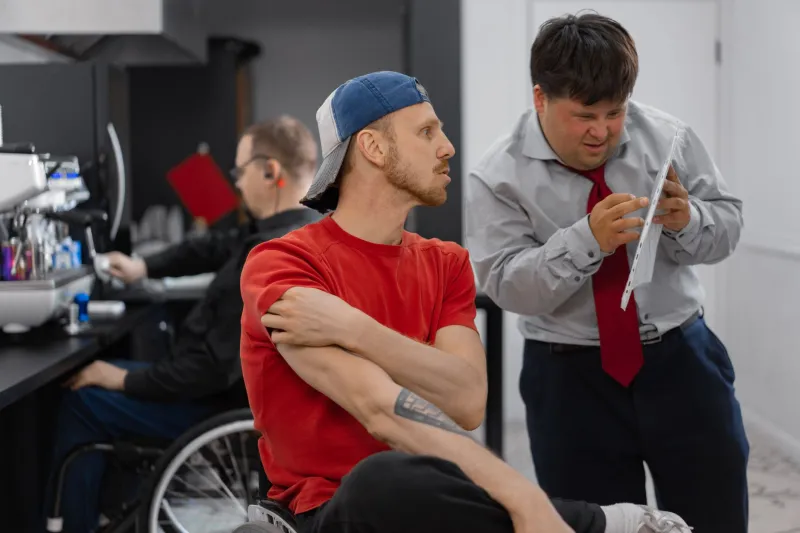
Walk the floor of any major US technology expo and the choreography is familiar: a standing-height pedestal, a bright screen angled toward a standing viewer, a demo script that assumes two free hands and working vision. For many attendees, that choreography works. For others, it quietly excludes them from the only evidence most products will offer before launch.
The Demo Is the Documentation
For emerging gadgets, the hands-on preview often functions as the primary documentation. Press kits are thin, spec sheets are incomplete, and software support policies are still being written. If the demo cannot be experienced by a person with a disability, the public record of that product is incomplete in a way that no later software update fully repairs.
This matters more at the early-adopter stage than at any other. Buyers with disabilities are not a niche audience in the United States; they are a substantial market, and they are often the users who surface design failures that mainstream reviewers miss. A demo that ignores them is not just a courtesy problem. It is a signal about how the product team thinks.
Where Startups Get It Right
A handful of seed-stage firms have begun treating showcase design as part of product design. The strongest examples share a few habits. They publish an accessibility note in the press kit before the show, listing what is supported at demo time and what is not. They provide at least one seated-height station and one station with a screen reader or captioning active. They train booth staff to describe the interface aloud without being asked. They offer quiet demo hours for attendees who find crowded halls difficult. And they keep a tactile sample or a non-visual equivalent on hand for products whose value is primarily visual.
None of this is expensive. It is mostly a matter of planning, and it tends to correlate with teams that have thought carefully about the product itself.
Four Failures That Keep Repeating
The standing-only pedestal. A device mounted at chest height above a crowded aisle is inaccessible to wheelchair users, people with fatigue conditions, and anyone who cannot stand for long periods. The fix is simple: one adjustable or seated-height station, clearly marked.
Single-channel feedback. A demo that communicates only through light, only through sound, or only through vibration excludes users who do not perceive that channel. Products with multi-modal feedback should demonstrate it, not hide it.
Gesture-dependent scripts. If the only way to navigate a demo is a swipe, a pinch, or a wave, the demo has a gate. Provide an alternative input path and show it in the same preview.
Missing accessibility specs after the demo. A common pattern is a promising hands-on session followed by a press kit with no mention of screen-reader support, captioning, switch control, or haptic alternatives. When the information is absent, buyers should assume it is unresolved.
Questions to Ask Before You Trust the Preview
- Can the interface be operated without vision? If so, what is the screen-reader story at demo time, not at some future firmware release?
- Does the device support alternative input, including switch control or external keyboards?
- Is captioning available for any audio or video content shown during the demo?
- What is the physical access plan for the booth, including aisle width, station height, and seating?
- For enterprise and education buyers, is there a Section 508 or state procurement roadmap?
- If the product is a wearable or a handheld, can it be demonstrated while seated, with one hand, or with limited grip strength?
- What happens after the show? Will accessibility documentation be published, and on what timeline?
- What is the return policy if the product does not work with a user's existing assistive setup?
Why US Buyers Should Care
Accessibility is not only a civil-rights consideration, although it is that. It is a procurement consideration. Public institutions, universities, and many large employers ask accessibility questions before they buy at scale, and consumer buyers increasingly do the same. A startup that cannot answer basic questions at a 2027 expo is a startup that will struggle in a US sales cycle that increasingly expects documentation.
The good news is that showcase accessibility is one of the few areas where a small team can compete immediately. A seated-height station, a captioning monitor, and a press kit that states what is supported cost far less than a booth upgrade. The teams that adopt these practices early will not only reach more attendees. They will also produce better evidence about their own products, which is what an expo preview is supposed to do.