The Suite Is the Stage: Reading the Private Demos That Will Define 2027's Gadget Cycle
For two decades, the convention floor served as the gadget industry's public launch engine: a keynote, a curtain drop, a crowd pressing toward a roped-off pedestal. That model still sells tickets. It no longer tells the whole story. Scheduling correspondence for CES 2027 in Las Vegas, and for the spring calendar of US technology conferences, increasingly points to a different center of gravity: the private suite, the appointment-only demo room, and the invitation that arrives without a corresponding public session anywhere on the program.
From Booth Theater to Badge-Gated Suite
The shift is not a rejection of the expo. It is a relocation of the decisive moment. Exhibition space remains expensive, and a well-placed booth still generates foot traffic, press photos, and the ambient credibility that comes from being seen. But the product decisions that matter to US buyers, carriers, retail chains, and institutional investors are increasingly made in smaller rooms nearby: hospitality suites, converted meeting spaces, and off-site showrooms that require a name on a list.
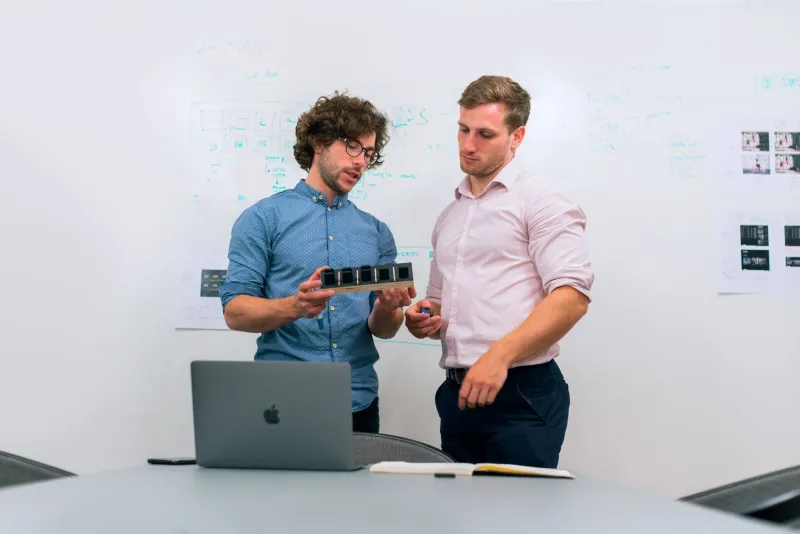
Three pressures drive the change. First, competitive intelligence moves faster than any embargo; a working prototype demonstrated to a crowd can be filmed, measured, and summarized before the booth staff has finished the pitch. Second, supply chains remain uneven, and many companies prefer to show a functioning unit to a small group rather than a mockup to a large one. Third, narrative control is easier in a room where the lighting, the script, and the audience are all curated.
For industry watchers, the practical consequence is that the public floor is becoming a trailer for a film that screens elsewhere.
How the Gate Actually Works
Access to these rooms is layered, and the layers are rarely advertised. The outermost ring is the public floor, open to any badge holder. The next ring is press and analyst access, often scheduled in advance and sometimes conditioned on an embargo agreement. Inside that sits partner access: retail buyers, carrier representatives, component suppliers, and investors who have a commercial reason to see the device early. The innermost ring is the by-introduction demo, where attendance depends on a prior relationship rather than a credential.
None of this is inherently sinister. Companies manage risk, protect unannounced features, and reserve engineering time for audiences that can actually place orders. But the gating is quiet, and it produces a predictable asymmetry: the people with the most influence over whether a product reaches US shelves often see it first, while the broader public and independent press see a polished version later, if at all.
A useful habit for watchers is to map the geography of a show before it opens. Which hotels and meeting complexes near the convention center are hosting hospitality suites? Which companies have booked private space but no public booth? Which executives are scheduled for closed-door meetings rather than panel appearances? These are not secrets so much as signals that require attention.
Signals That Never Reach the Stage
Some of the most important product evidence never appears on a public stage. It appears in regulatory filings, component supplier announcements, certification listings, patent continuations, and job postings. A company that shows a non-functional shell at its booth may be demonstrating a working unit in a suite three blocks away. A startup that skips the show floor entirely may still be meeting with the two or three US retail partners that determine its first-year distribution.
Private demos also produce a different kind of information. In a small room, a product manager will answer questions about thermal limits, battery replacement, repair access, and software support windows that would never survive a keynote script. The catch is that this information is shared selectively and rarely enters the public record in a verifiable form.
For early adopters, the lesson is to treat the public demo as a first look, not a final verdict. The questions that matter most — what ships, when, at what price, and with what support commitments — are often answered in rooms that the public never enters.
A Practical Reading Guide for US Watchers
- Track meeting requests and calendar invitations, not just booth schedules. A company with a full suite calendar and an empty public stage is signaling where its priorities sit.
- Ask what is live and what is rendered. A working unit and a video loop are different evidence, and the distinction should be stated plainly.
- Note who is escorted past the rope line. The composition of a private audience often predicts which retail channels and carriers will carry a product first.
- Follow up at thirty, sixty, and ninety days. The gap between a suite demo and a shipping product is where most early-adopter risk lives.
- Watch for the second show. Companies that reveal privately in January often repeat the demo publicly by spring, with a narrower set of claims.
What the Public Record Loses
The back-room launch is efficient for companies and useful for buyers with appointments. It is less useful for the public record. Independent verification, comparative testing, and the kind of accidental discovery that happens when a curious attendee wanders into an unfamiliar booth all depend on open access. As more reveals move behind a scheduling link, the expo floor risks becoming a showroom for products already vetted elsewhere.
The floor will not disappear. The crowds, the press conferences, and the spectacle still serve a purpose. But the 2027 cycle is likely to reward watchers who read the calendar as carefully as the keynote, and who understand that the most important demo at a major expo may never appear on the official floor plan at all.