The Repair Bay Belongs on the Show Floor: Vetting 2027’s Modular Gadgets
Repairability has long been the spec sheet’s least glamorous line item. At the 2027 expo cycle, that is changing. Across preview halls and private demo suites, modular laptops, serviceable earbuds, and smart-home devices with replaceable radios are being positioned less as niche engineering exercises and more as mainstream product virtues. For US early adopters, the shift matters because it changes what a show-floor demo is actually promising: not just a prettier gadget, but a device that can stay in service after the launch buzz fades.
Why the repair story is gaining floor space
The context is regulatory and cultural. Right-to-repair momentum in the United States has moved from activist pressure to statehouse law and Federal Trade Commission attention. Several states have enacted rules requiring access to parts, tools, and documentation for certain electronics, and manufacturers increasingly treat serviceability as a compliance and brand issue. At the same time, buyers are keeping phones, laptops, and appliances longer. A repairable design is a hedge against inflation, supply-chain surprises, and the quiet disappointment of a sealed device that fails at the port or battery.
Expo floors reflect that. A vendor that once hid a glued-shut chassis now brings a cutaway unit, a torque driver, and a parts menu. The message is not merely that the product can be opened. It is that the company has planned for the product to be opened.
Genuine modularity versus demo-only theater
Not every repair-friendly demo survives contact with a shipping box. The difference between real modular design and show-floor theater usually appears in the details that a booth attendant can answer without calling headquarters.
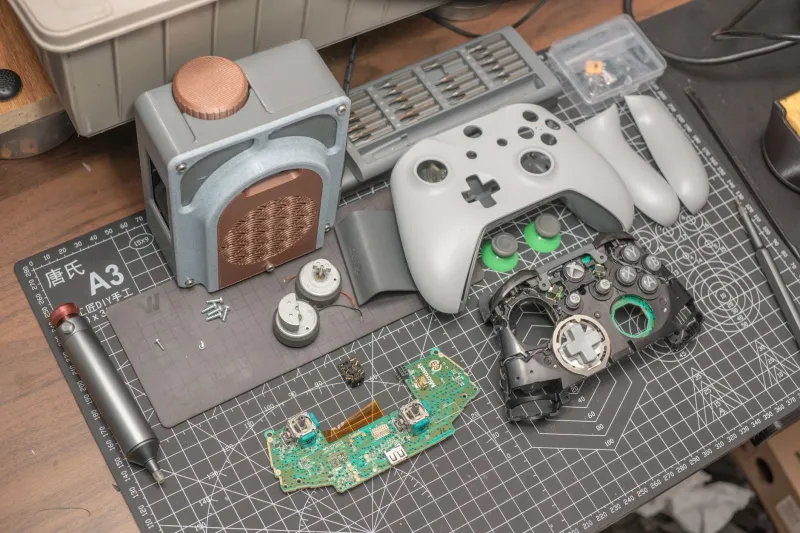
Genuine modularity tends to include standard fasteners rather than proprietary clips; replacement parts with published prices; service documentation available before launch; batteries and displays that can be swapped without full chassis destruction; and software that does not refuse to recognize legitimate components. A credible vendor will also explain warranty treatment for self-repair and identify which parts are user-serviceable versus technician-only.
Demo-only theater often looks impressive at a distance. A case opens with a theatrical click. A modular accessory is shown in a render. The booth has one working unit and no part numbers. When asked about calibration, the answer is a promise about a future program. When asked about software pairing, the answer is that the team is looking into it. Those are not necessarily signs of bad faith, but they are reasons to wait for independent teardowns and parts availability.
Booth-level examples worth watching
At 2027 expos, three booth patterns deserve attention. The first is the modular laptop and mini-PC cluster, where vendors are likely to emphasize socketed memory, replaceable ports, and published service manuals. Framework’s earlier work in this category has made the question unavoidable for competitors: if a laptop can ship with a repair guide, why can’t the rest of the hall? Watch for whether the 2027 entrants match documentation with actual US parts distribution.
The second is repairable audio. Wireless earbuds have been a repair black spot because batteries are small, adhesives are common, and water resistance is hard to preserve. A booth that shows battery replacement in under ten minutes, offers replacement tips and batteries as catalog items, and explains how seals are restored is making a meaningful claim. A booth that shows only an exploded-view poster is not.
The third is the serviceable smart-home hub. As Matter and Thread consolidate the category, the replaceable radio module becomes a practical feature rather than a curiosity. A hub whose networking module can be upgraded without replacing the whole unit has a longer useful life. The question at the booth is whether the module is sold separately, whether firmware supports it, and whether the company has committed to a support window.
A US buyer’s floor checklist
Before treating repairability as a headline spec, ask for four things. First, a parts list with US pricing and expected availability dates. Second, the actual service manual, not a marketing PDF. Third, the warranty terms for owner repairs and the procedure for obtaining components. Fourth, the software policy: whether replacement parts require proprietary pairing tools, whether diagnostics are open to independent shops, and whether the device will accept a legitimate battery or display without artificial warnings.
It is also worth asking where the device is assembled and how spare parts will be stocked. A modular design with a two-week parts pipeline from overseas is less useful than a sealed design with a strong US service network. Repairability is a system, not a hinge.
The signal after the show
The strongest repairability claims will be tested after the badges are packed away. Watch for teardown videos, parts-store openings, and service documentation that appears before the first retail shipments. A vendor that publishes a manual and sells a battery in the same quarter as launch is signaling confidence. A vendor that keeps the cutaway unit in the case and the parts list behind an NDA is signaling something else.
For US early adopters, repairability is no longer a charity purchase or a tinkerer’s niche. It is a durability spec, a cost-of-ownership calculation, and increasingly a legal expectation. The 2027 expo floor will reward buyers who treat the screwdriver not as a prop but as a question.