Sticker Forensics: What Demo-Unit Labels Reveal About 2027 Launch Supply
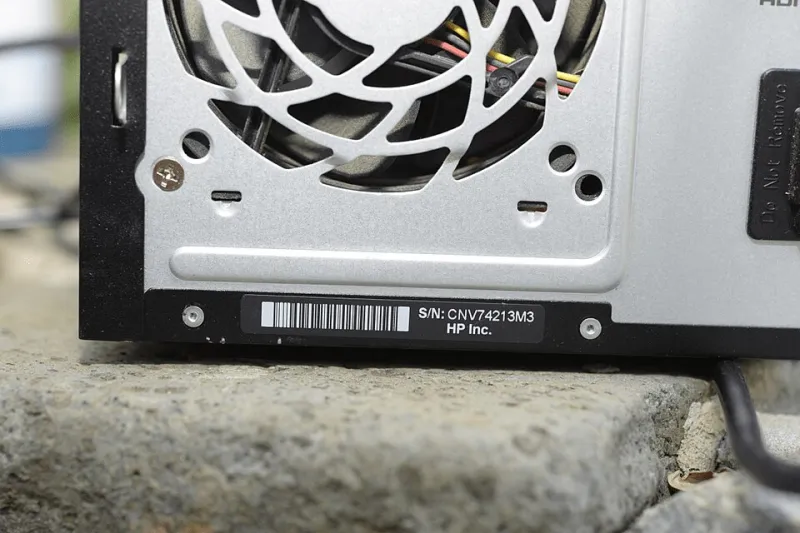
Photo: Federal Bureau of Investigation, Public domain, via Wikimedia Commons
At CES 2027, the most informative detail on many demo units may not be the screen, the hinge, or the sensor array. It may be the small label on the back. Serial-number stickers, region codes, build markings, and the simple count of visible units can offer a ten-minute reality check on a vendor’s US launch plans. None of these labels is a guarantee. But together they form a useful inventory-forensics routine for attendees who want to separate a plausible production timeline from stagecraft.
Why the Label Matters
Expo floors are designed to direct attention toward the product experience. Demo units are usually cleaned, charged, and staged. The labeling is often overlooked, even though it can reveal where a device sits in the development cycle. A serial tag may include a model number, a unit sequence, a region code, a build date, and sometimes a phase marker such as EVT, DVT, or PVT. Those abbreviations refer to engineering validation, design validation, and production validation. A demo unit carrying an early-phase marking is not necessarily a bad product. It is, however, a signal that the hardware may still be changing.
The useful comparison is between the label and the promise. If a vendor says a US SKU will ship in the first quarter of 2027, the demo hardware should generally look close to production. That means production-validation or mass-production markings, a US region code, retail packaging, and a power adapter intended for the US market. A booth full of engineering samples can still support a launch, but it raises the burden of proof.
Reading the Sticker Without Overreading It
Start with the model number and serial number. A single model displayed across several booths may carry consecutive serials, which often suggests a small hand-built batch. A wider spread of serials across multiple ranges can suggest a larger pilot or production run. Neither pattern is conclusive. Vendors sometimes relabel demo units, and event contractors may add asset tags that obscure the original sticker. Attendees should ask before photographing a label and should never peel or alter it.
Region codes are equally practical. A device labeled for Europe may still be shown in the US as a global demo, but it is not the same as a US-configured unit. Check the power adapter, the regulatory markings, and the language on the retail box. If the booth displays a US ship date but every visible unit carries a non-US region code, ask which hardware will actually reach US retail. The answer may be reasonable, but it should be specific.
Counting Units Is Not the Same as Counting Inventory
Visible demo units are not a shipment forecast. A vendor may bring five units to a public booth and twenty to private suites. Another may bring one hero unit and rely on video. The count is still useful when compared across models and locations. A company that promises a broad US retail launch but shows only one prototype-grade unit at a major expo is making a claim that deserves a follow-up question. A company showing multiple units, retail packaging, and consistent software builds is offering more evidence.
Pay attention to the condition of the hardware as well. Molded retail trays, printed quick-start guides, and packaged accessories suggest a more mature production process. Generic foam, brown boxes, and loose cables suggest a sample build. Software build numbers can reinforce the same story. A demo running a generic engineering build may not reflect what consumers will see at checkout.
Cross-Checking the Ship Date
Ask for the US ship date in plain terms: the SKU, the channel, and the month. Then compare that date with the label. If the promised date is eight to twelve weeks away, the hardware should be at or near production validation. If the label points to design validation and the ship date is imminent, the vendor may be compressing testing, or it may be describing a limited launch. Both are possible. The label does not resolve the question, but it identifies which question to ask.
A short booth audit can be done without tools. Note the model and serial range. Check for phase markings. Look for a US region code. Count visible units. Inspect the packaging and adapter. Ask whether the demo is a press sample or a production-equivalent unit. Record the exact US ship date and channel. Compare notes across booths showing the same category. Ten minutes of observation will not replace a review, but it can expose the gap between a polished demo and a production run.
A Ten-Minute CES 2027 Checklist
- Photograph the label only with permission, and record model, serial range, region code, and build date.
- Look for EVT, DVT, PVT, prototype, or pre-production markings.
- Count visible units of the same model across the booth and adjacent demo areas.
- Check for retail packaging, US power adapters, and printed US-market materials.
- Ask for the exact US SKU, ship month, and retail channel.
- Confirm whether the displayed unit is a press sample, a pilot build, or production equivalent.
- Compare serial ranges across multiple units to see whether they look hand-built or run-built.
- Note the software build and whether it appears to be a retail build or an engineering build.
The Limits of the Signal
Labels can be generic, outdated, or deliberately uninformative. Some vendors use production hardware for demos but delay software. Others use early hardware that is already representative of the final design. The point is not to declare a launch real or fake from a sticker. The point is to force a more precise conversation about US availability, unit volume, and production maturity.
For early adopters walking the 2027 expo circuit, that is a worthwhile return on ten minutes. Serial numbers do not lie, but they do require context. Read them alongside the ship date, the packaging, and the answers from the booth staff. The combination is a better forecast than any single tag.